Every product moving across India’s manufacturing floors, export hubs, and logistics networks relies on one foundational requirement: barcode clarity that lasts. Whether it’s a GS1 barcode on an export carton, a batch code on a pharmaceutical bottle, or a WIP label on an automotive component, print durability determines whether your supply chain stays accurate or falls apart.
As India’s regulatory environment becomes more demanding and export volumes rise, industries now depend on labels that withstand friction, dust, temperature shifts, moisture, oils, long-distance transport, and high-speed conveyor handling. And at the centre of this reliability lies wax resin ribbons, the preferred choice for mid- to high-durability thermal transfer printing.
For manufacturers, brand owners, exporters, packaging heads, and logistics operators, wax resin ribbons form the backbone of traceability, compliance, and operational efficiency. This guide explains how they work, where they excel, and how they help businesses maintain accuracy across India’s rapidly scaling supply chains.
At a Glance
Wax Resin Ribbons combine wax and resin to deliver medium to high durability, making them ideal for high-volume labelling in industries like manufacturing, logistics, and export.
These ribbons provide high-definition prints, ensuring clear barcode readability even under demanding conditions like moisture, abrasion, and temperature variations.
Best suited for semi-gloss labels, coated papers, and synthetic materials like PP and PET, often used in export cartons, WIP labels, and asset tagging.
Wax resin ribbons offer a cost-effective balance between performance and affordability, outperforming basic wax ribbons while being more economical than full resin ribbons.
What Is a Wax Resin Ribbon?
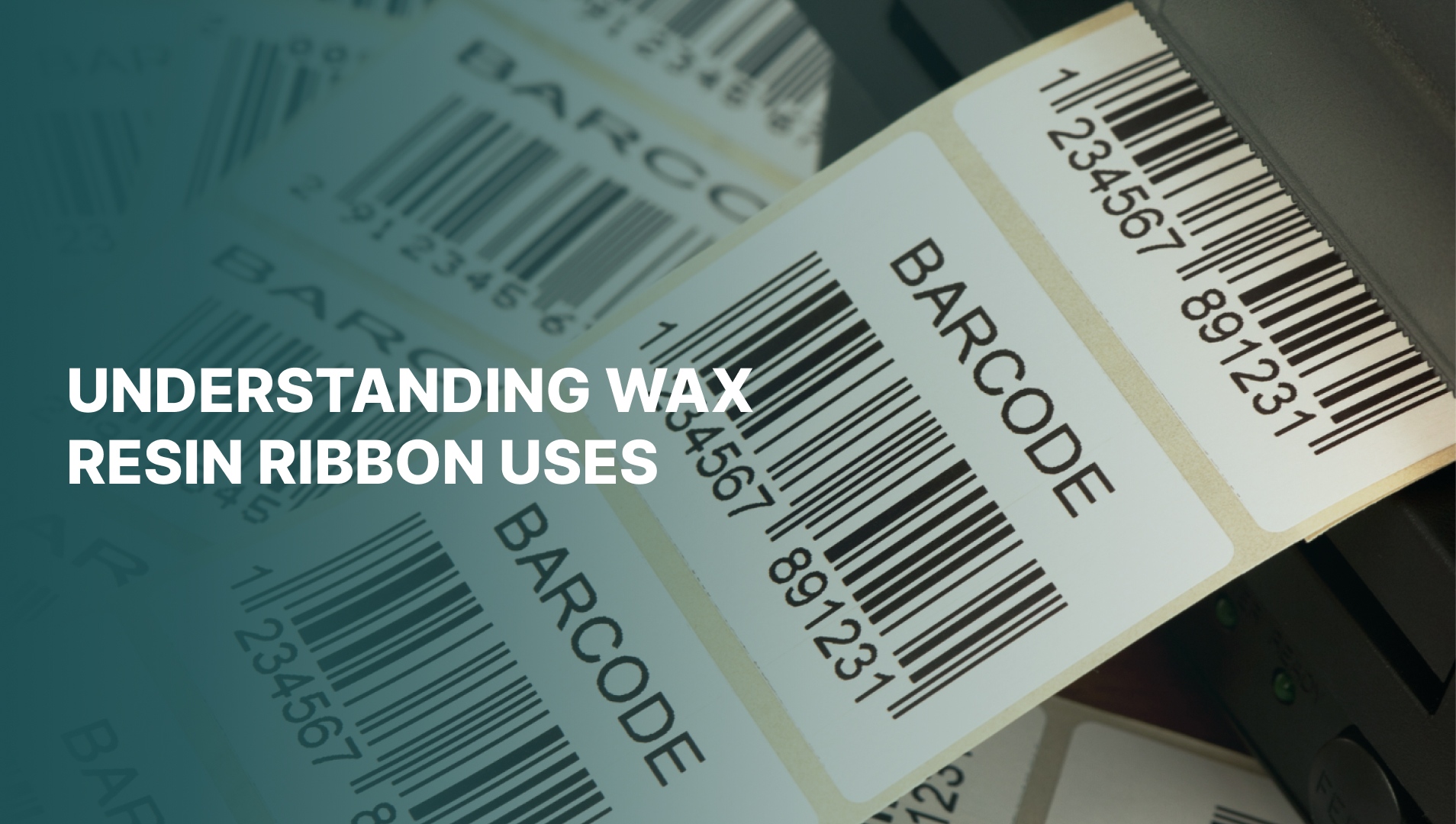
Wax resin ribbons are engineered to print durable, sharp, and scan-ready barcodes on labels for mid- to high-demand environments. They combine two materials:
Wax component → enables smooth transfer and crisp print quality
Resin component → enhances resistance to smudging, scratches, moisture, and moderate chemicals
This combination creates a ribbon that offers significantly higher durability than basic wax ribbons, but at a lower cost and lower energy output compared to full resin ribbons.
Why They Matter for India’s Industrial and Export Ecosystem?
Many Indian industries rely on dense and regulatory-driven barcodes, GS1 codes for pharmaceuticals, MRP labels for FMCG, traceability codes for electronics, batch codes for chemicals, and carton labels for exports.
Wax resin ribbons deliver:
High-definition printing for dense or small barcodes
Clear scanning across automated lines
Reliable readability through long storage or long-distance transport
Best Material Compatibility
Wax resin ribbons work exceptionally well with:
Semi-gloss labels
Coated paper labels
Synthetic substrates like PP and PET are often used in export packaging, drum labels, and outdoor asset labels
In production environments with dust, friction, or repeated handling, these ribbons maintain barcode clarity that simple wax ribbons cannot.
Why Wax Resin Ribbons Are Preferred in Medium to Large-Scale Operations?
In medium to large-scale operations, where efficiency, durability, and accuracy are paramount, wax resin ribbons offer a perfect balance of cost and performance. These ribbons are specifically designed to withstand the demands of high-volume environments, providing reliable barcode printing that endures friction, moisture, and environmental stress.
Here's why they are the preferred choice for industrial businesses looking to maintain operational excellence.
Designed for High-Speed Production Lines
Industrial operations use high-speed thermal-transfer printers that run thousands of labels per hour. Wax resin ribbons:
Melt evenly at consistent temperatures
Resist buildup on the printhead
Maintain clarity at high speeds
This ensures uninterrupted production and fewer reprints.
2. Resistant to Handling, Abrasion & Moderate Chemicals
Manufacturing and logistics operations expose labels to:
Conveyor friction
Dust, oils, and lubricants
Pallet stacking
Machinery movement
Wax resin ribbons offer enough durability to withstand such routine industrial wear without fading or smudging.
3. Highly Stable Scan Rates for Inventory & Export Compliance
Automated warehouses, export ports, and distribution centres depend on precise scanability. Any damaged barcode results in delays, manual intervention, or compliance failures.
Wax resin ribbons ensure:
Bold contrast
Sharp edges
High-density barcode readability
This helps prevent mis-scans and costly logistical bottlenecks.
4. Works Across Multiple Environmental Conditions
Whether labels are applied:
On hot production lines
In humid warehouses
On frozen products or chilled pharma batches
On export cartons exposed to temperature shifts
Wax resin prints remain stable and readable throughout their journey.
Major Use Cases of Wax Resin Ribbons for Manufacturers, Exporters & Logistics Operators
For manufacturers, exporters, and logistics operators, these ribbons are essential for streamlining processes, enhancing traceability, and meeting regulatory requirements.
Below, we explore the major use cases where wax resin ribbons provide substantial value.
Component Identification & WIP Labels (Manufacturing)
Across automotive, electronics, appliances, chemicals, and engineering facilities, components move through multiple stages:
Cutting
Assembly
Quality checks
Packaging
These environments expose labels to friction, dust, and moderate heat. Wax resin ribbons ensure:
Sharp print quality for small barcodes
Readability through multiple process touchpoints
Stability under light abrasion near machinery
This reduces scanning errors and supports real-time production tracking.
Pallet Labels & Outer Carton Markings (Export & Domestic Shipping)
Forklift handling, stacking pressure, moisture, tied straps, and long-distance shipping all challenge label durability.
Wax resin ribbons are ideal for:
Export carton labels
Pallet ID tags
Port documentation
Outer case barcodes
They deliver prints that withstand minor impacts and humidity changes, as well as extended storage in warehouses or containers. This makes them a preferred choice for exporters handling large-volume consignments.
Track-and-Trace Labels (Pharma, Electronics, FMCG)
As India moves toward stricter serialisation & traceability standards, wax resin ribbons support:
GS1 compliant barcodes
Serialisation & batch numbers
UDI codes in medical devices
Expiry & manufacturing date labels
Their crisp print quality ensures regulatory adherence and prevents compliance failures.
Industrial Security Labels & Tamper-Evident Tags
Certain industries require authenticity protection:
Luxury goods
Electronics
High-value components
Pharma supplies
Wax resin printing supports microtext, fine-line printing, and anti-copy patterns. These add visual security without requiring specialised materials.
Cold Storage & Controlled-Temperature Logistics
Cold chain environments challenge labels with:
Condensation
Freezing surfaces
Moisture droplets
Wax resin prints remain readable despite temperature fluctuations, making them suitable for frozen foods, pharma vaccines, biotech materials, and chilled FMCG goods.
Wax Resin vs Other Ribbon Types: Which Suits Industrial Needs?
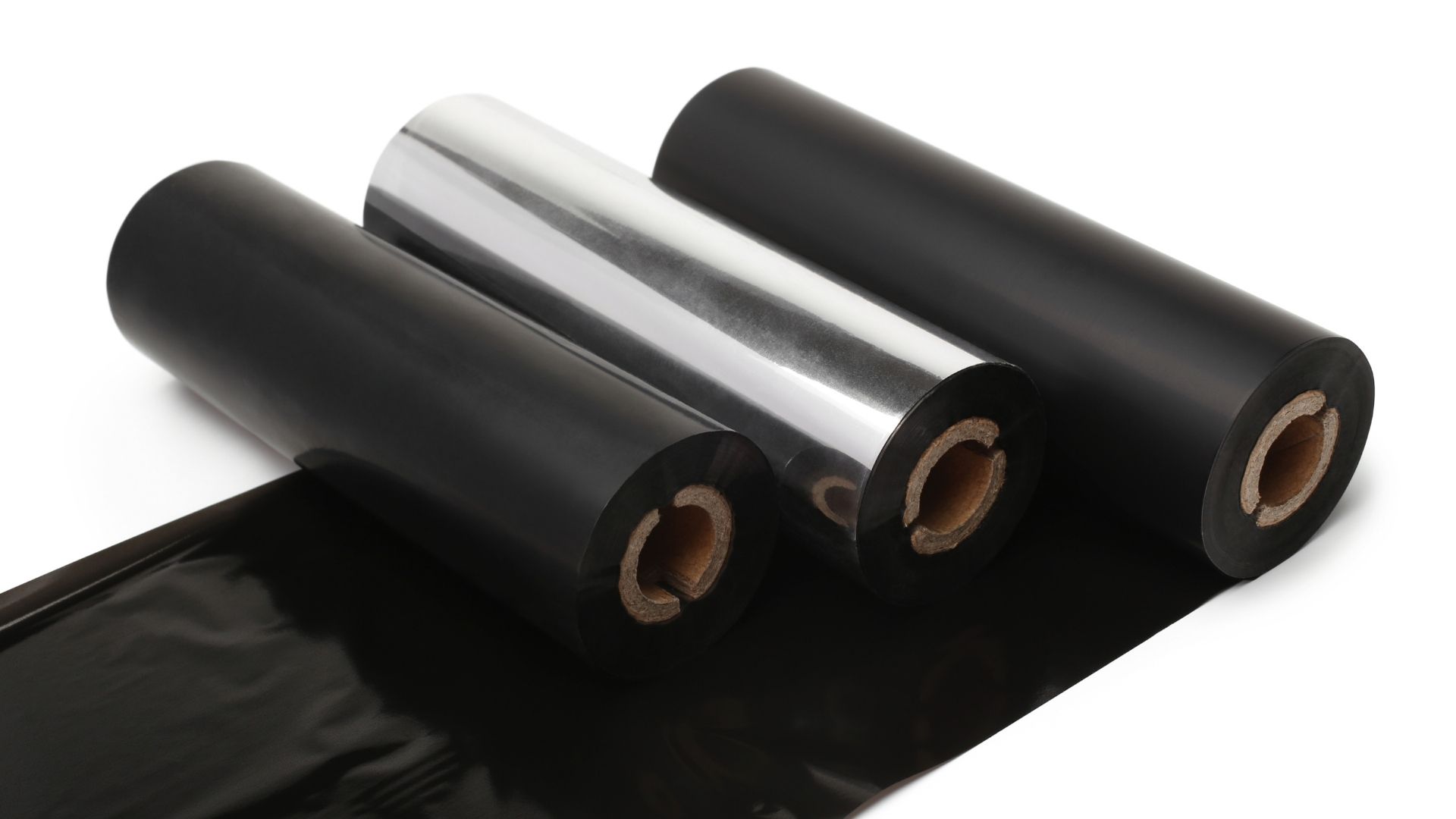
Choosing the right ribbon type is crucial for ensuring barcode durability, scan accuracy, and long-term performance in industrial labelling. Different ribbon formulations offer different levels of resistance to friction, chemicals, temperature variations, and moisture.
The table below compares Wax, Wax Resin, and Full Resin ribbons to help you select the most appropriate option for their operational conditions and compliance requirements.
Ribbon Type | Durability | Best Suited For | Common Limitations |
Wax Ribbon | Low | Indoor applications, temporary labels | Smudging, fading, not suitable for harsh conditions |
Wax Resin Ribbon | Medium to High | Manufacturing, logistics, export, and cold storage | Slightly more expensive than wax ribbons |
Full Resin Ribbon | High | Harsh environments, long-term tracking | High cost, over-specified for many needs |
Choosing the Right Wax Resin Ribbon for High-Volume Industrial Printing
Choosing the right wax resin ribbon is crucial for ensuring consistent print quality, durability, and cost-efficiency in high-volume industrial environments. The correct selection minimises downtime, reduces reprints, and ensures smooth operations across production and supply chain processes.
Let’s look at how to choose the right wax resin ribbon.
Substrate Selection
The ribbon must match the label’s material. Wax resin ribbons are ideal for:
Semi-gloss labels
Coated paper labels
Polypropylene (PP)
Polyester (PET)
These materials are common across India’s export and manufacturing sectors.
Printer Match (Zebra, TSC, SATO, Honeywell)
Compatibility matters because:
Ribbon width must match print width
Core dimensions must align
The coating side must suit the printer’s design
An incorrect match increases printhead wear
Industry-grade ribbons must be tested on the exact printer models used in your line.
Required Durability Based on Supply Chain Conditions
Consider potential hazards:
Dust exposure in factories
Moisture during transport
Vibrations on conveyor lines
Friction during stacking
By matching the ribbon to the environment, businesses reduce misprints and reprints.
Long-Run Efficiency & Cost Optimization
A well-matched ribbon:
Prevents printhead damage
Minimises operator intervention
Reduces label waste
Ensures consistent scanability
Over thousands of prints per shift, the right wax resin ribbon significantly cuts operational costs.
Common Issues in High-Volume Industrial Labelling & How Wax Resin Ribbons Solve Them

In India, where manufacturing processes are scaling up and export compliance is becoming more stringent, companies face various challenges in maintaining label quality under demanding conditions. Issues such as fading prints, smudging, and barcode scanning errors can lead to operational inefficiencies, compliance violations, and costly delays.
Wax resin ribbons are specifically designed to address these challenges. They provide the ideal balance of durability, affordability, and print clarity needed to overcome common industrial labelling problems.
Below, we explore the most common issues businesses face and how wax resin ribbons help address them.
Fading During Transport or Export Handling
Standard wax ribbons often fade when exposed to:
Moisture
Rough stacking
Long transit durations
Wax resin ribbons maintain barcode integrity, reducing compliance risks during export checks.
Smudging on Production Lines
Dust, vibration, and high-speed friction can smudge low-quality prints. Wax resin’s resin component locks the print tightly to the substrate for lasting clarity.
Barcode Readability Failures in Automated Warehouses
Automated systems do not tolerate damaged barcodes.
Wax resin printing minimizes:
Edge distortion
Low contrast
Incomplete bars
This ensures rapid scanning with fewer manual interventions.
Best Practises for Improving Print Quality in Large-Scale Labelling Environments
Clean printheads regularly during shift changes
Maintain correct ribbon tension
Match label materials to the correct ribbon grade
Store ribbons in cool, controlled environments to prevent brittleness
Track ribbon consumption to manage costs and avoid downtime
These steps significantly improve consistency and operational efficiency.
How Gannayak Packaging Supports High-Volume Industrial Labelling?

Gannayak Packaging offers a comprehensive range of thermal transfer ribbons, including wax, wax resin, and resin ribbons, to meet the varied demands of high-volume industrial labelling.
Each ribbon type is engineered with specific durability requirements in mind:
Wax Ribbon: Ideal for general-purpose applications such as shipping labels and retail tags, these cost-effective ribbons provide high-quality prints for short-term labelling needs.
Wax Resin Ribbon: A perfect balance of affordability and durability, wax resin ribbons are great for food packaging, asset tags, and outdoor labels. Their resistance to scratches and smudging makes them suitable for medium to high-volume production lines.
Resin Ribbon: Designed for high-durability applications like industrial labelling and healthcare product marking, resin ribbons offer superior chemical and environmental resistance, ensuring long-lasting print quality even in extreme conditions.
Why Choose Gannayak Packaging’s Thermal Transfer Ribbons?
Gannayak’s thermal transfer ribbons are built for industries that require high-quality and durable prints with consistent results. Whether your application demands chemical resistance, scratch-proof labels, or general-purpose printing, our thermal transfer ribbons are suited to handle the toughest environments, including healthcare labelling, industrial applications, and food packaging.
We also provide customised solutions to help you select the right ribbon type based on your specific needs, ensuring optimised performance and cost-efficiency for every labelling process.
Explore Gannayak’s thermal transfer ribbons for high-performance labelling solutions. Contact us for expert guidance on choosing the right ribbon for your business needs.
Final Thoughts
For mid-to-large manufacturers, exporters, logistics operators, and brand owners, wax resin ribbons deliver the reliability needed to maintain traceability and efficiency at scale. They strike the ideal balance between durability and cost-effectiveness, making them suitable for thousands of use cases across India’s industrial sectors.
From production lines to export containers, wax resin ribbons protect barcode readability at every step, reducing reprints, minimising downtime, and strengthening compliance.
Gannayak Packaging supports businesses in selecting the most suitable ribbon–label combination, supplying industrial-grade wax resin ribbons customised for high-volume workflows, automation systems, and regulatory requirements.
FAQs
Which industries benefit most from wax resin ribbons in high-volume production?
Industries such as pharmaceuticals, automotive, electronics, FMCG, chemicals, and export manufacturing benefit because they require durable, high-definition barcodes that withstand handling and environmental changes.
Are wax resin ribbons suitable for export cartons that face rough handling?
Yes. Wax resin prints remain intact through stacking, forklift handling, port environments, and long-distance transit, making them ideal for export cartons and pallets.
Do wax resin ribbons work on synthetic materials like PP and PET?
Absolutely. These substrates bond well with wax resin formulations, ensuring long-lasting barcode clarity even under demanding conditions.
How long do wax resin prints last in warehouse and logistics environments?
Wax resin prints maintain readability for months to years, depending on the substrate and storage conditions, sufficient for most manufacturing, warehousing, and export operations.
What ribbon specs should manufacturers consider for continuous industrial printing?
Key factors include ribbon width, length, core size, printer compatibility, coating side, and the match between ribbon grade and label substrate.