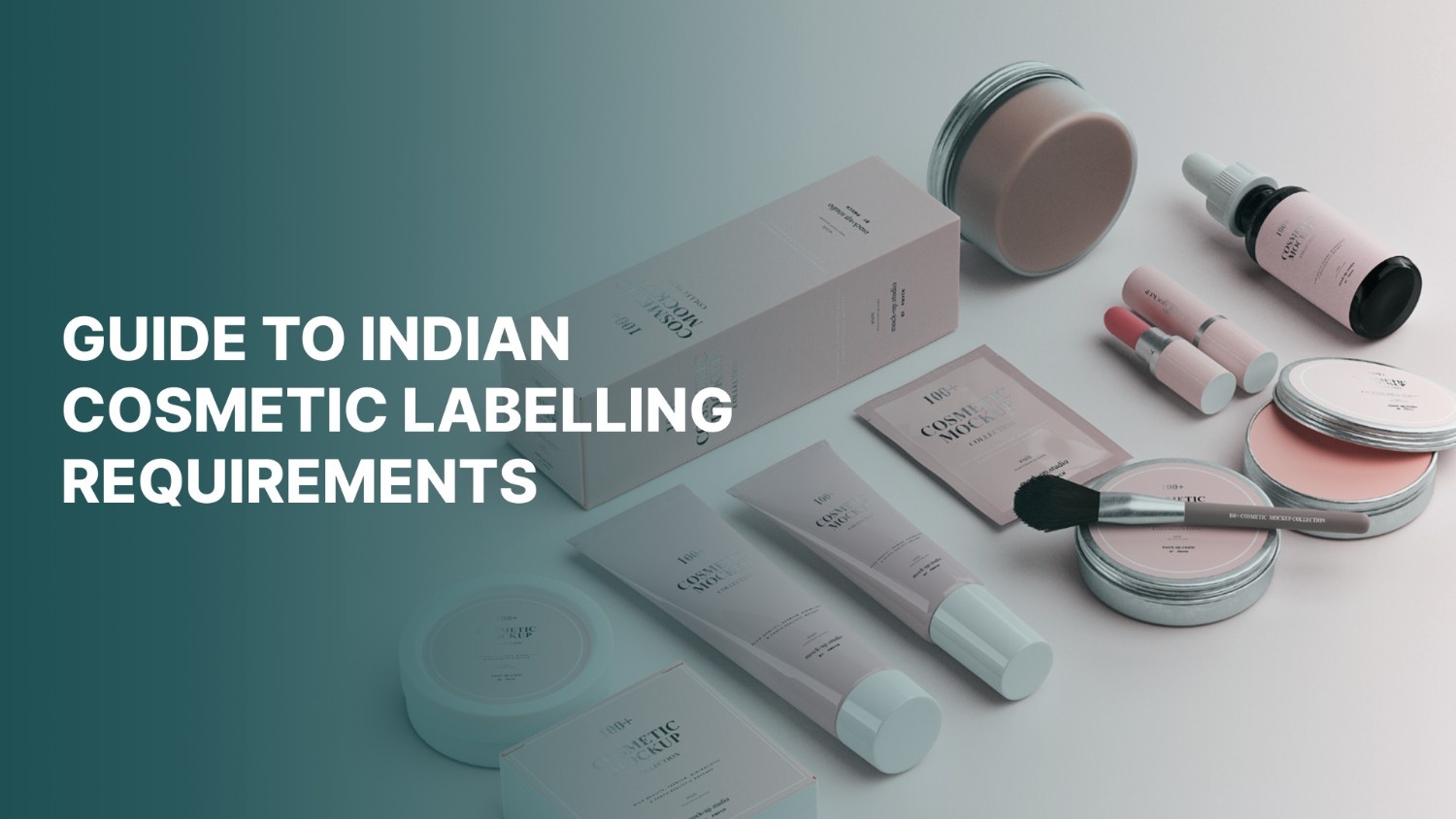
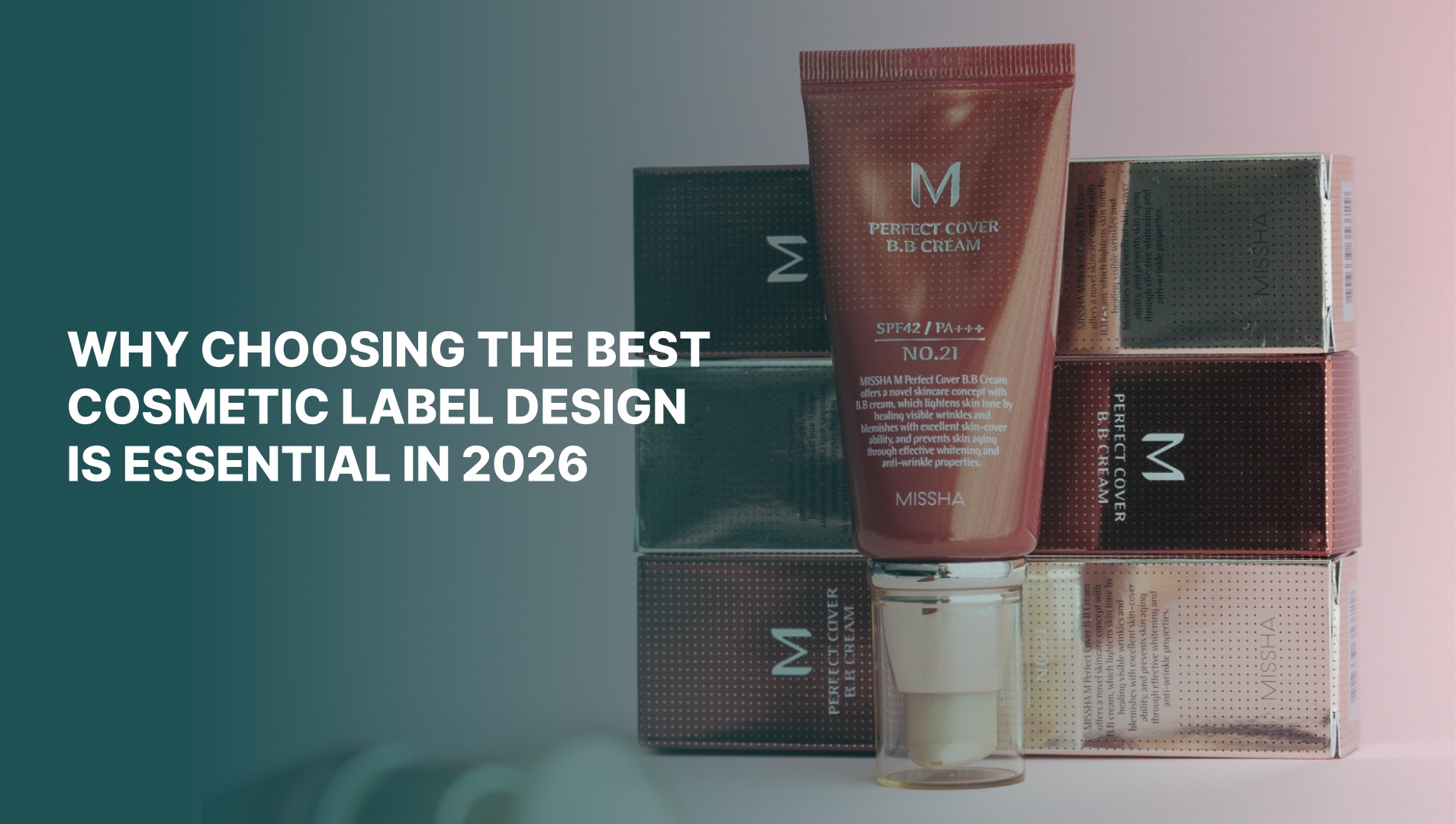
Cosmetic label design determines how beauty and personal care products compete, comply, and scale in 2026. As shelves become more crowded and regulations more closely enforced, labels must do far more than look attractive, they must communicate trust, transparency, and compliance at a glance.
In today’s market, first-impression packaging influences purchase decisions, while inaccurate or poorly designed labels can lead to delayed launches, relabeling costs, or regulatory non-compliance. Modern cosmetic label design directly affects manufacturability, material performance, and consistency across growing product lines.
This blog explores the essential elements of effective cosmetic label design, including visual layout principles, compliance requirements, material and adhesive selection. It also covers how businesses can choose label solutions that support long-term production and market expansion.
Key Takeaways
Cosmetic label design in 2026 must balance visual appeal with regulatory compliance, manufacturability, and scalability across product lines.
Effective label design depends on clear information hierarchy, readability, and structured layouts that perform on limited packaging space.
Material, adhesive, and printing choices directly influence label durability in moisture-, oil-, and bathroom-exposed cosmetic environments.
Designing labels for scalable production reduces rework by maintaining color consistency, artwork control, and version accuracy across SKUs.
Partnering with an experienced labeling manufacturer helps cosmetic brands maintain compliance, consistency, and operational efficiency as volumes grow.
What is the Relevance of Cosmetic Label Design in Packaging
Cosmetic label design goes beyond visual creativity. While graphic design focuses on colors, imagery, and brand aesthetics, label design combines visual layout, information structure, and functional packaging requirements.
In packaging, labels act as the primary interface between the product and the consumer. They communicate brand identity, product purpose, and trust while operating within strict space and regulatory limitations.
Key aspects of cosmetic label design include:
Difference between graphic design and label design: Graphic design emphasizes appearance, whereas label design must account for print accuracy, material behavior, and regulatory placement.
Role of labels in brand communication: Labels express brand tone, product positioning, and quality perception at the point of sale.
Information hierarchy on small packaging formats: Limited surface area requires careful prioritization so product name, function, and mandatory details remain legible.
Design as a bridge between marketing and manufacturing: Effective label design ensures creative concepts can be reproduced consistently in production without layout issues, misalignment, or compliance risks.
When cosmetic label design balances aesthetics with structure and functionality, it supports both brand impact and scalable packaging execution.
Core Elements of Effective Cosmetic Label Design
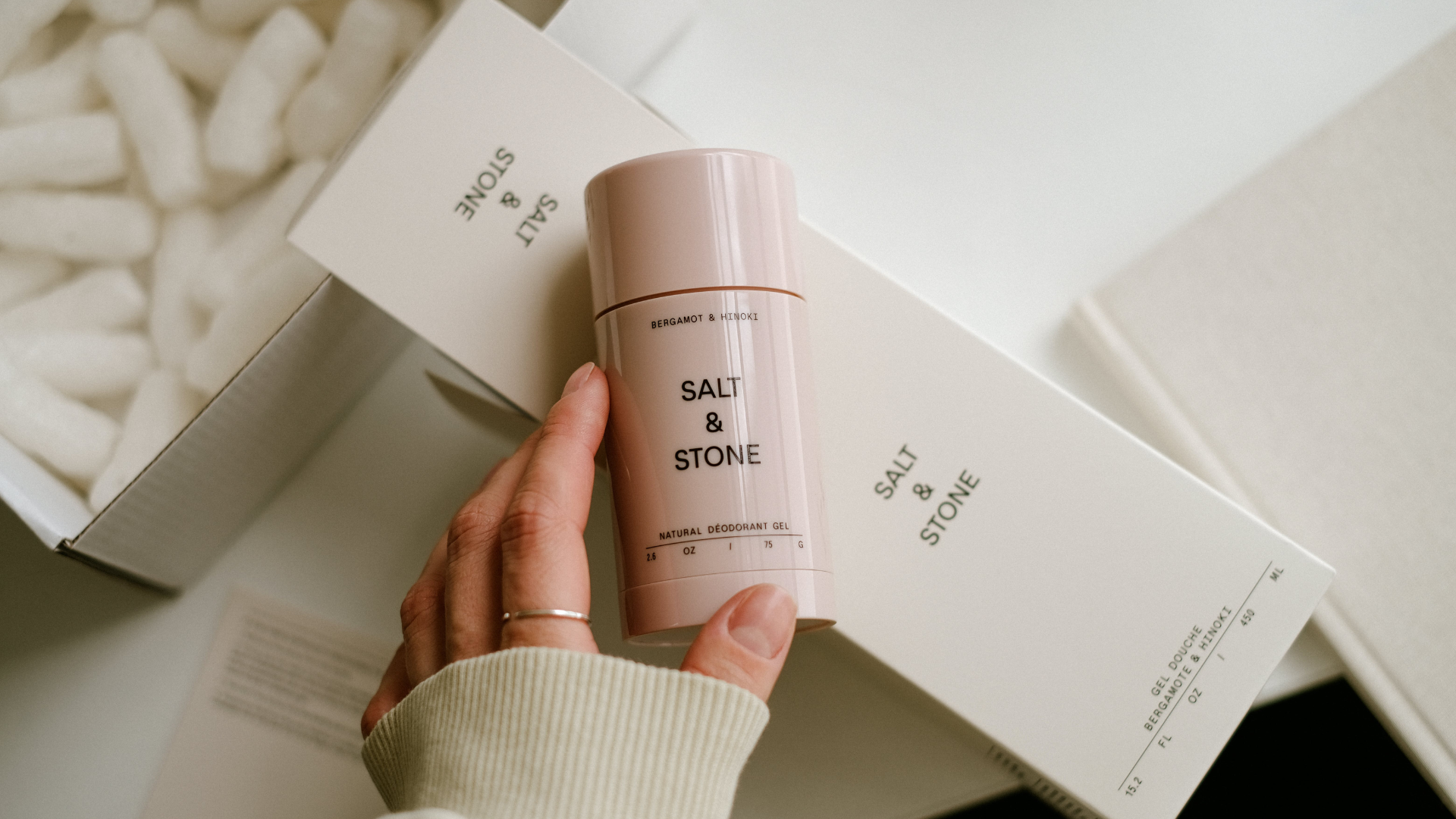
Effective cosmetic label design balances visual appeal with clarity and usability. While creativity plays an important role, successful labels rely on structured design principles that ensure consistency, readability, and shelf impact.
Key elements to consider include:
Brand identity and consistency: Labels should reflect the brand’s visual language through consistent use of logos, fonts, and color palettes across all product variants.
Typography selection: Fonts must remain legible at small sizes while aligning with the brand’s personality. Overly decorative typefaces can reduce clarity on compact packaging.
Color psychology in cosmetics: Colors influence perception and emotional response. Soft tones often communicate skincare and wellness, while bold colors are commonly used for cosmetics focused on energy or performance.
Information hierarchy: Content should be organized so that the product name, function, and key benefits are immediately visible, with secondary information placed logically.
White space and readability: Adequate spacing prevents clutter, improves legibility, and allows important elements to stand out on limited label areas.
Front vs back label planning: The front label typically focuses on branding and product identity, while the back label accommodates ingredients, directions, and regulatory information.
Applying these principles helps cosmetic labels remain visually appealing while supporting clarity, compliance, and production efficiency.
When branding goals, regulatory disclosures, and production constraints must align on limited label space, design precision becomes essential. Gannayak Packaging supports cosmetic brands with label materials and printing solutions engineered to preserve clarity, consistency, and compliance across high-volume packaging environments.
Regulatory and Compliance Requirements for Cosmetic Labels
Cosmetic products are regulated in most major markets to ensure consumer safety, truthful communication, and transparent ingredient disclosure. Unlike design-only discussions, a B2B cosmetic label must align with regulatory expectations to be legally marketed, distributed, and sold. Compliance reduces risk of enforcement actions, product recalls, and costly redesigns.
International Framework: ISO 22715 (Cosmetics: Packaging and Labelling)
The ISO 22715:2006 standard defines internationally recognised guidelines for cosmetic packaging and labeling, specifying the information that should appear on cosmetic products offered for sale or free distribution. It covers label content and structure to support clarity and safety across markets.
Although ISO 22715 itself is a standards framework, many national regulations refer to the principles it sets for label information and layout, helping harmonise cosmetic labeling practices globally.
United States FDA Cosmetic Labeling Regulations
In the U.S., cosmetic labeling is regulated under the Federal Food, Drug, and Cosmetic Act (FD&C Act) and the Fair Packaging and Labeling Act (FPLA), enforced by the U.S. Food and Drug Administration (FDA).
Key points:
Cosmetic labels must accurately disclose product identity, net quantity, ingredient list, and manufacturer/distributor information.
Label statements must be prominent and legible.
Ingredients must generally be listed in descending order of predominance using accepted nomenclature.
Labels with false or misleading information may render a product misbranded and subject to regulatory action.
European Union: Regulation (EC) No. 1223/2009
Cosmetic labeling in the European Union is governed by Regulation (EC) No. 1223/2009, which sets harmonised rules for all cosmetic products sold within the EU. Official regulatory information is available from the European Commission’s cosmetics portal.
Under this regulation:
Labeling must include the responsible person’s name and address, batch number, nominal content, list of ingredients (INCI), and appropriate warnings.
Information must be legible, indelible, and visible throughout the product’s shelf life.
Mandatory elements support traceability and consumer protection across member states.
India: CDSCO and the Cosmetics Rules, 2020
In India, cosmetic labeling is regulated under the Drugs and Cosmetics Act, 1940 and the Cosmetics Rules, 2020 enforced by the Central Drugs Standard Control Organisation (CDSCO).
Required labeling information includes product name, net contents, batch number, manufacturer or importer details, and ingredient listing. Compliance is necessary for market approval, import clearance, and retail distribution.
Regulatory compliance for cosmetic label design is foundational because it:
Enables legal market access in target geographies
Protects consumer health and safety by ensuring critical information is visible
Avoids misbranding and enforcement penalties that can delay or halt product sales
Supports cross-border distribution by aligning with differing regional expectations
Builds brand credibility with regulators, retailers, and consumers
Designing cosmetic labels with regulatory requirements integrated early prevents costly rework, supports audit readiness, and improves confidence during product launches.
Mandatory Information Needed on Cosmetic Labels in 2026
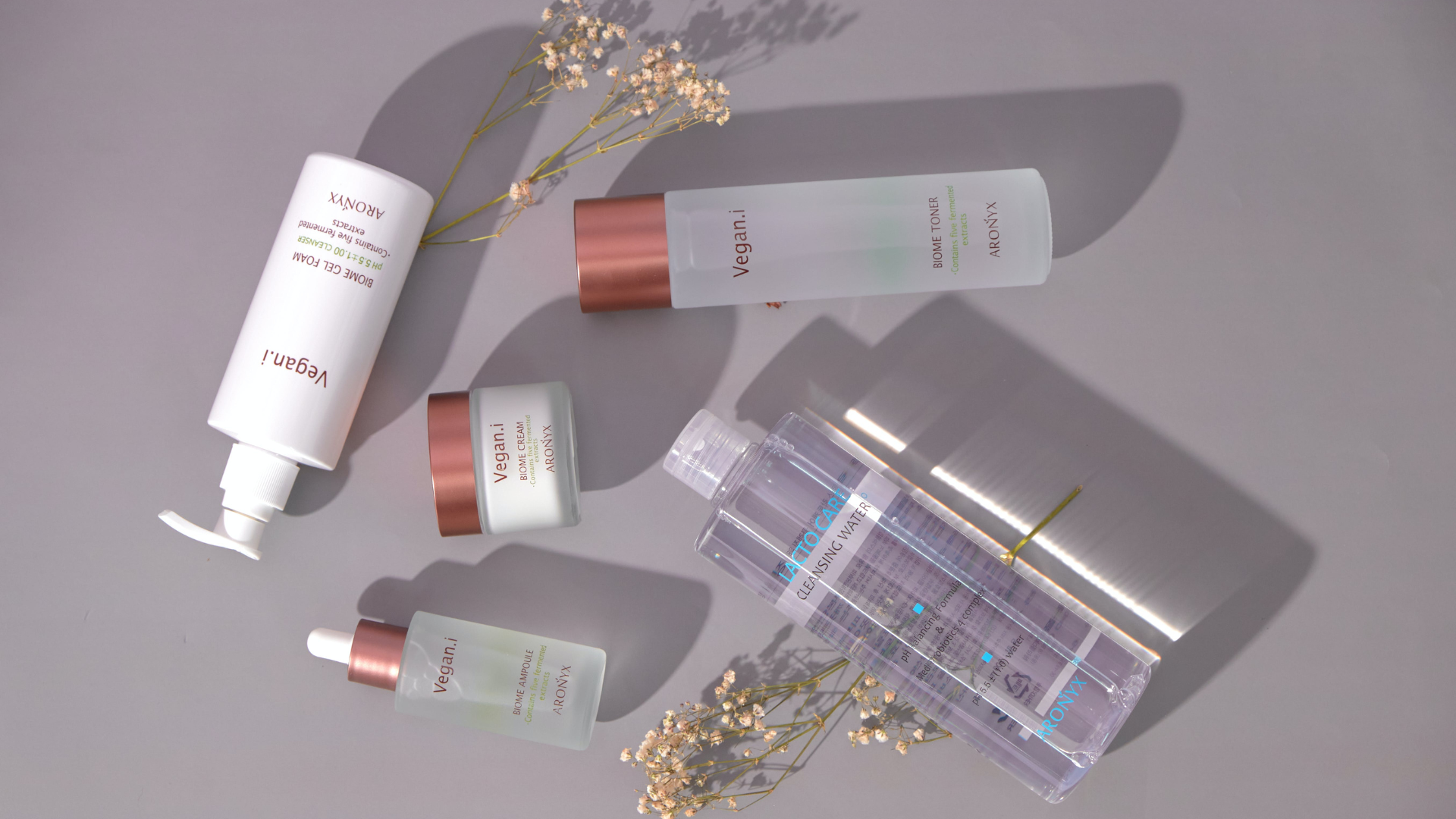
Cosmetic labels must communicate essential product and safety information clearly and accurately.
While design influences shelf appeal, regulatory compliance depends on whether mandatory details are present, legible, and correctly positioned on the packaging.
Core information required on cosmetic labels includes:
Product name and function: The label must clearly identify the product and its intended use, especially when the function is not obvious from the name.
Net quantity: The amount of product must be declared using appropriate units of weight, volume, or count, depending on the product format.
Ingredients declaration: Ingredients must be listed using accepted nomenclature and generally arranged in descending order of concentration, subject to regional rules.
Usage directions: Instructions for proper use help ensure consumer safety and prevent misuse.
Warnings and caution statements: Mandatory warnings must be included where required, particularly for products that may pose risks if incorrectly used.
Manufacturer or marketer details: The name and address of the responsible entity must be displayed for traceability and regulatory accountability.
Batch or lot number: Batch identification enables quality tracking, recalls, and complaint investigations.
Manufacturing and expiry dates: Date markings communicate product shelf life and safe usage periods.
Because cosmetic packaging often provides limited surface area, layout planning is critical. Front labels are typically reserved for branding and product identification, while back or wrap-around labels accommodate regulatory text.
Clear typography, logical grouping of information, and adequate spacing help maintain legibility without overcrowding the design.
Effective cosmetic label design balances visual branding with regulatory clarity, ensuring all mandatory information remains readable throughout the product’s lifecycle.
Material Considerations for Cosmetic Labels Design
Cosmetic label performance depends on how well materials, adhesives, and printing methods work together.
While design defines appearance, these technical elements determine whether labels remain intact, legible, and visually consistent throughout the product lifecycle.
Material Selection for Cosmetic Labels
Different cosmetic products require different label materials based on exposure conditions, packaging format, and shelf-life expectations.
Paper labels: Commonly used for dry, outer packaging and premium cartons. They offer good print quality but limited resistance to moisture and oils.
Polypropylene (PP): Widely used for cosmetic containers due to its flexibility and resistance to water, making it suitable for bathroom and shower environments.
Polyester (PET): Offers higher durability and chemical resistance than PP. Often selected for long shelf life, export packaging, and products exposed to oils or frequent handling.
Clear film labels: Provide a “no-label look” that enhances shelf appeal. Typically used on transparent bottles where aesthetics are prioritized alongside moisture resistance.
Metallic and textured substrates: Used to create premium visual effects. These materials require careful printing and finishing to maintain consistency in large production runs.
Material choice directly affects how labels perform under humidity, product seepage, cleaning exposure, and long-term storage.
Adhesive Considerations for Cosmetic Packaging
Adhesives play a critical role in label reliability, especially given the variety of container materials used in cosmetics.
Glass bottles require adhesives that bond well to smooth, non-porous surfaces.
Plastic containers and squeezable tubes often need flexible adhesives that move with the packaging without lifting.
Curved surfaces reduce contact area, increasing the risk of edge lifting if adhesive flow is insufficient.
Oil-based cosmetic products can migrate onto container surfaces and weaken incompatible adhesives.
Refrigerated or humid storage environments demand adhesives that maintain tack under temperature variation and moisture.
Incorrect adhesive selection is a common cause of label rejection, peeling, and rework during production and distribution.
Printing Methods and Finishes
Printing technology determines both visual quality and scalability.
Flexographic printing: Well suited for high-volume production with consistent color reproduction and cost efficiency at scale.
Digital printing: Ideal for shorter runs, multiple SKUs, or frequent artwork changes, offering speed and flexibility.
Thermal transfer printing (where applicable): Used for variable data such as batch codes, barcodes, or secondary labeling.
Finishing options commonly used in cosmetic labels include:
Matte or gloss finishes to influence texture and shelf perception
Foil stamping for premium branding elements
Spot UV to highlight logos or product names
Lamination to improve moisture resistance and surface protection
Each finish involves trade-offs between durability, cost, and production complexity. Selecting the right combination ensures cosmetic labels maintain both visual appeal and functional performance at scale.
Cosmetic Label Design Considerations for Scalable Production
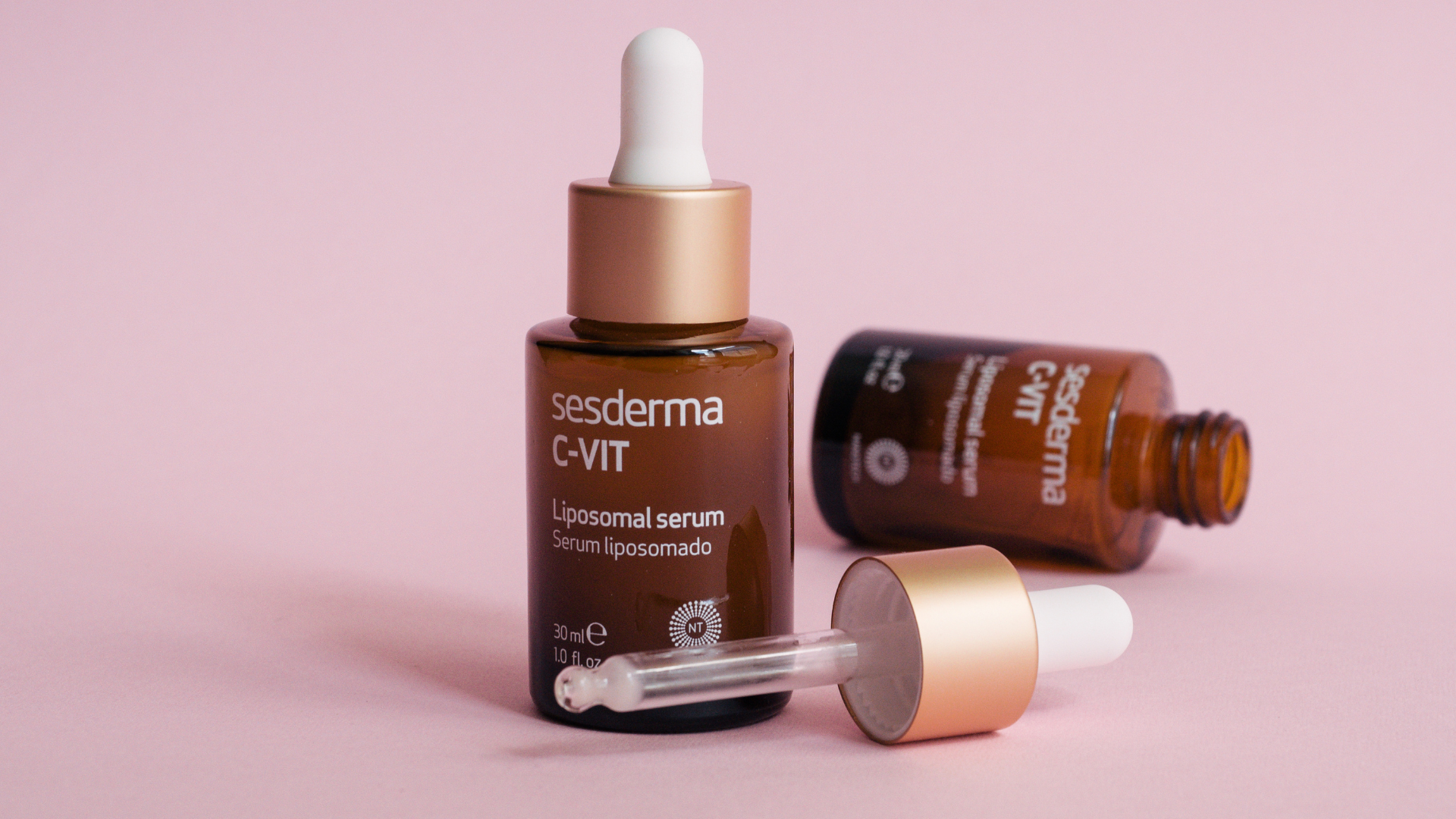
Cosmetic label design must support not only brand aesthetics but also repeatable manufacturing. As product lines expand and volumes increase, design decisions directly affect production efficiency, quality control, and cost stability.
Scalable label design ensures that packaging remains consistent across batches, SKUs, and markets without repeated redesign or approval delays.
Key considerations include:
Color consistency across batches: Standardized color profiles and print references help maintain uniform appearance across multiple production runs.
Tolerance control: Label dimensions, bleed areas, and cut tolerances must accommodate high-speed application without misalignment or rejection.
Artwork repeatability: Designs should be reproducible across different print runs and materials without variation in layout or legibility.
Version management for SKUs: Multiple variants such as fragrance, shade, or formulation changes require controlled artwork updates to prevent mix-ups.
Regulatory updates and redesign cycles: Labels must be adaptable to ingredient changes, regulatory amendments, or market-specific requirements.
Minimum order quantity (MOQ) considerations: Designs should account for production volumes, balancing cost efficiency with inventory flexibility.
Scalable design minimizes waste, reduces downtime, and supports faster product expansion.
Common Cosmetic Label Design Mistakes
Many cosmetic label failures occur not due to branding choices, but because practical packaging constraints are overlooked.
Common issues include:
Overcrowded layouts that compromise readability and compliance
Poor contrast between text and background, reducing legibility
Illegible fonts that fail at small label sizes
Missing mandatory data required for regulatory approval
Non-durable materials unsuitable for moisture or oil exposure
Designs that cannot scale across SKUs or production volumes
Avoiding these mistakes early helps prevent costly reprints, delayed launches, and compliance risks while ensuring labels remain consistent throughout the product lifecycle.
Best Practices for Cosmetic Label Design
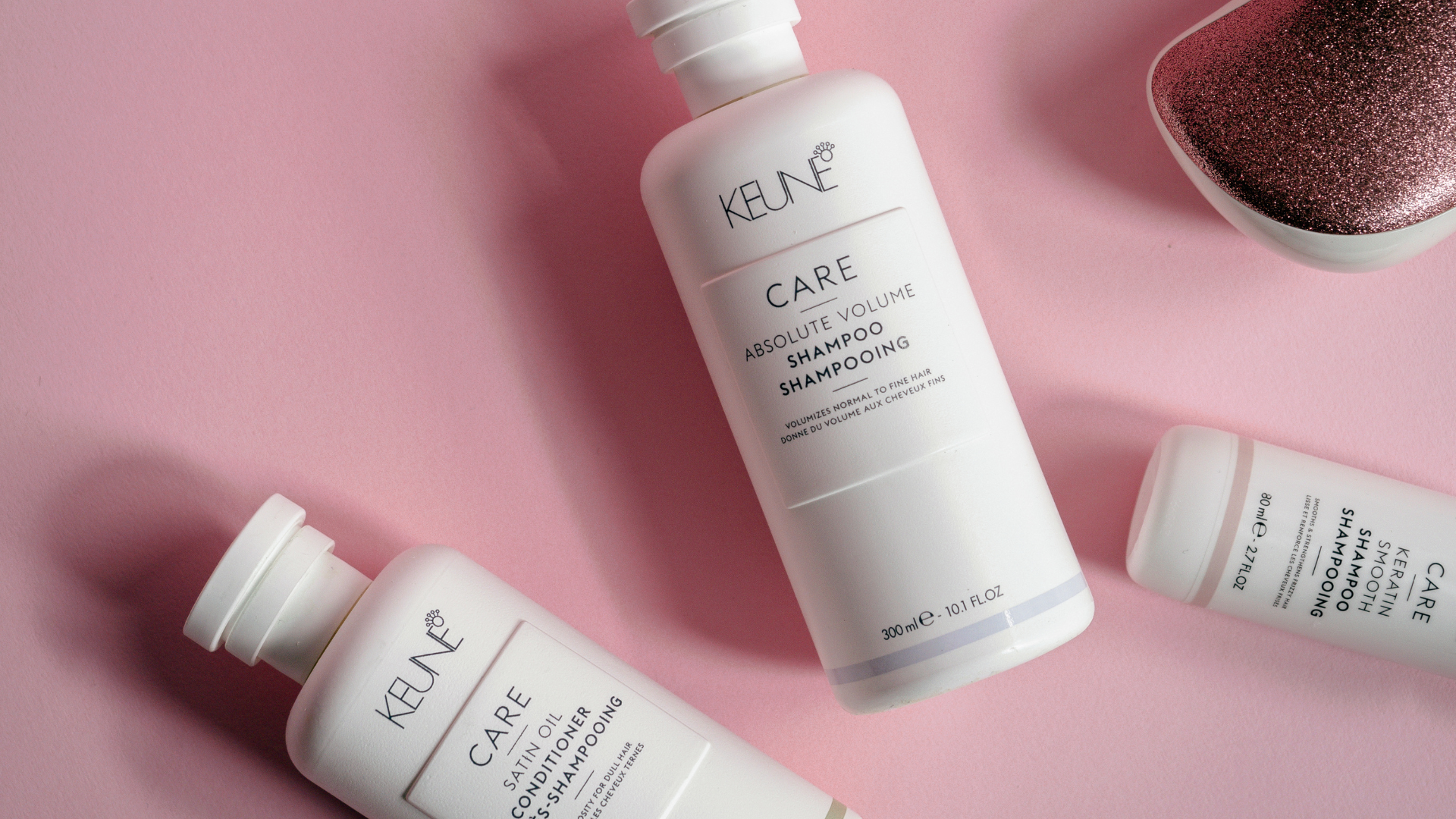
Following proven best practices helps ensure cosmetic labels remain visually effective, compliant, and production-ready as volumes scale.
Design with compliance in mind from the start: Allocate space early for mandatory information to avoid last-minute layout changes.
Prioritize readability over decoration: Use clear fonts, sufficient contrast, and practical font sizes that remain legible on small containers.
Limit unnecessary design variations: Consistent layouts across product ranges simplify approvals and improve production efficiency.
Select materials based on real use conditions: Match label substrates and finishes to moisture, oil exposure, and handling frequency.
Standardize color references and artwork files: Maintain consistent color profiles and approved artwork to avoid batch-to-batch variation.
Plan for future expansion: Design labels that can accommodate new SKUs, language changes, or regulatory updates without complete redesign.
Test labels before full-scale production: Sampling helps validate adhesion, print clarity, and durability under actual packaging conditions.
Applying these best practices reduces rework, supports smoother production runs, and ensures cosmetic labels perform consistently from initial launch through long-term growth.
How to Choose the Right Cosmetic Label Supplier
Selecting a cosmetic label supplier plays a critical role in ensuring design accuracy, regulatory compliance, and long-term production stability.
Beyond printing capability, suppliers must understand the operational and regulatory demands of cosmetic packaging.
When evaluating potential partners, the following checklist helps guide decision-making:
Compliance knowledge: The supplier should understand cosmetic labeling requirements across target markets and support the correct placement of mandatory information.
Material recommendations: Ability to recommend suitable label materials based on moisture exposure, oil content, container type, and shelf-life expectations.
Print quality consistency: Consistent color reproduction and sharp text across repeated production runs are essential for brand integrity.
Finish capabilities: Access to finishes such as matte, gloss, lamination, or decorative enhancements without compromising durability.
Bulk manufacturing capacity: Capability to support high-volume orders while maintaining quality standards and lead-time reliability.
Export readiness: Experience with labeling requirements for international markets, including packaging durability and documentation support.
Documentation support: Provision of technical specifications, material details, and batch traceability to support audits and quality reviews.
Choosing a supplier with these capabilities helps cosmetic brands minimize production risk, streamline approvals, and scale packaging operations with confidence.
This is where packaging partners such as Gannayak Packaging play a role in aligning design intent with production, compliance, and consistency requirements.
How Gannayak Packaging Assists Cosmetic Labeling Design

Gannayak Packaging supports cosmetic label design by aligning visual requirements with material performance, print durability, and production consistency.
Its labeling capabilities are structured to meet the functional demands of cosmetic packaging environments while maintaining accuracy across high-volume manufacturing.
For cosmetic labeling applications, Gannayak provides:
Custom cosmetic labels developed for bottles, jars, tubes, and secondary packaging formats.
Material and adhesive guidance based on moisture exposure, oil content, container type, and shelf-life expectations.
Support for barcode and batch coding, enabling traceability across manufacturing and distribution stages.
Consistent bulk printing to maintain color accuracy, layout integrity, and repeatability across production runs.
Structured support for product lines and variants, allowing controlled version management across SKUs, fragrances, and formulations.
In addition to cosmetic labels, Gannayak Packaging offers complementary packaging and labeling solutions that support broader operational needs, including:
Printed labels for branding and regulatory applications across industries.
High-security and tamper-evident labels for product protection and authenticity verification.
Barcode labels and thermal transfer ribbons compatible with industrial printing systems.
Recycled plastic packaging materials, supporting sustainability initiatives within packaging supply chains.
By combining label manufacturing, material expertise, and scalable production under one supply framework, Gannayak Packaging helps cosmetic brands maintain consistency, compliance, and efficiency as packaging requirements evolve.
Conclusion
Cosmetic label design presents growing challenges as brands navigate tighter regulations, shorter launch timelines, multiple SKUs, and demanding packaging environments. Design gaps, material mismatches, or inconsistent printing can quickly lead to compliance issues, production delays, and increased rework costs.
Gannayak Packaging addresses these challenges through application-specific label materials, adhesive guidance, consistent bulk printing, and support for scalable product lines, helping cosmetic brands maintain clarity, compliance, and packaging reliability as they grow.
Speak with Gannayak Packaging to discuss your cosmetic label design requirements.
Frequently Asked Questions (FAQs)
1. Can cosmetic labels be produced with multiple languages?
Yes. Multi-language cosmetic labels are commonly used for export markets. Experienced manufacturers like Gannayak Packaging support structured layouts that accommodate multiple languages while maintaining readability and compliance.
2. How early should label design be finalized before production?
Label design should be locked before packaging material procurement begins. Early finalization helps avoid delays caused by artwork revisions, material incompatibility, or regulatory re-approvals.
3. Can cosmetic labels be updated without redesigning the entire layout?
Yes. Modular label structures allow updates such as ingredient changes or regulatory text revisions without altering the core design, helping reduce rework and printing waste.
4. Are cosmetic labels suitable for automated label application machines?
Cosmetic labels can be engineered for automatic application by controlling material stiffness, adhesive tack, and dimensional tolerances, an area where supplier manufacturing precision is critical.
5. How do cosmetic brands maintain consistency across multiple suppliers?
Consistency is best maintained through centralized label production, standardized materials, and controlled artwork management. Gannayak Packaging supports this approach through uniform bulk manufacturing and repeatable print standards.