Identification labels for equipment are used for asset tracking, maintenance planning, and compliance across manufacturing and industrial facilities. When these labels fade, peel, or become unreadable, equipment identification becomes unreliable, leading to maintenance errors, audit gaps, and traceability issues.
Many organizations face recurring problems due to incorrect label materials, unsuitable adhesives, or printing methods that cannot withstand operating conditions. Over time, this results in repeated relabeling, downtime, and higher operational risk.
This blog explains how identification labels for equipment function, the common reasons they fail, suitable materials and adhesives, printing method considerations, industry-specific applications, and the key factors to evaluate when selecting labels for long-term durability and compliance.
Key Takeaways
Equipment identification labels function as long-term operational infrastructure, directly supporting asset traceability, maintenance accuracy, and audit readiness.
Most label failures occur due to environmental exposure, such as heat, chemicals, abrasion, and incorrect adhesive or ribbon selection.
Material choice, including polyester, polypropylene, polyimide, or metal foil, must align with temperature range, chemical resistance, and expected service life.
Printing method and ribbon compatibility play a major role in long-term legibility, with thermal transfer printing and resin ribbons offering the highest durability.
Supplier capability, including material guidance, adhesive compatibility testing, and consistent bulk supply, significantly reduces relabeling frequency and operational risk.
What are Identification Labels for Equipment?
Identification labels for equipment are durable labels used to permanently mark machinery, tools, and industrial assets for accurate identification throughout their service life. Their primary function is to ensure each piece of equipment can be uniquely identified, tracked, and referenced during daily operations.
These labels support asset management by enabling equipment tracking, linking machines to maintenance schedules, and maintaining accurate service records. In regulated environments, equipment identification labels also assist with compliance documentation and audit readiness.
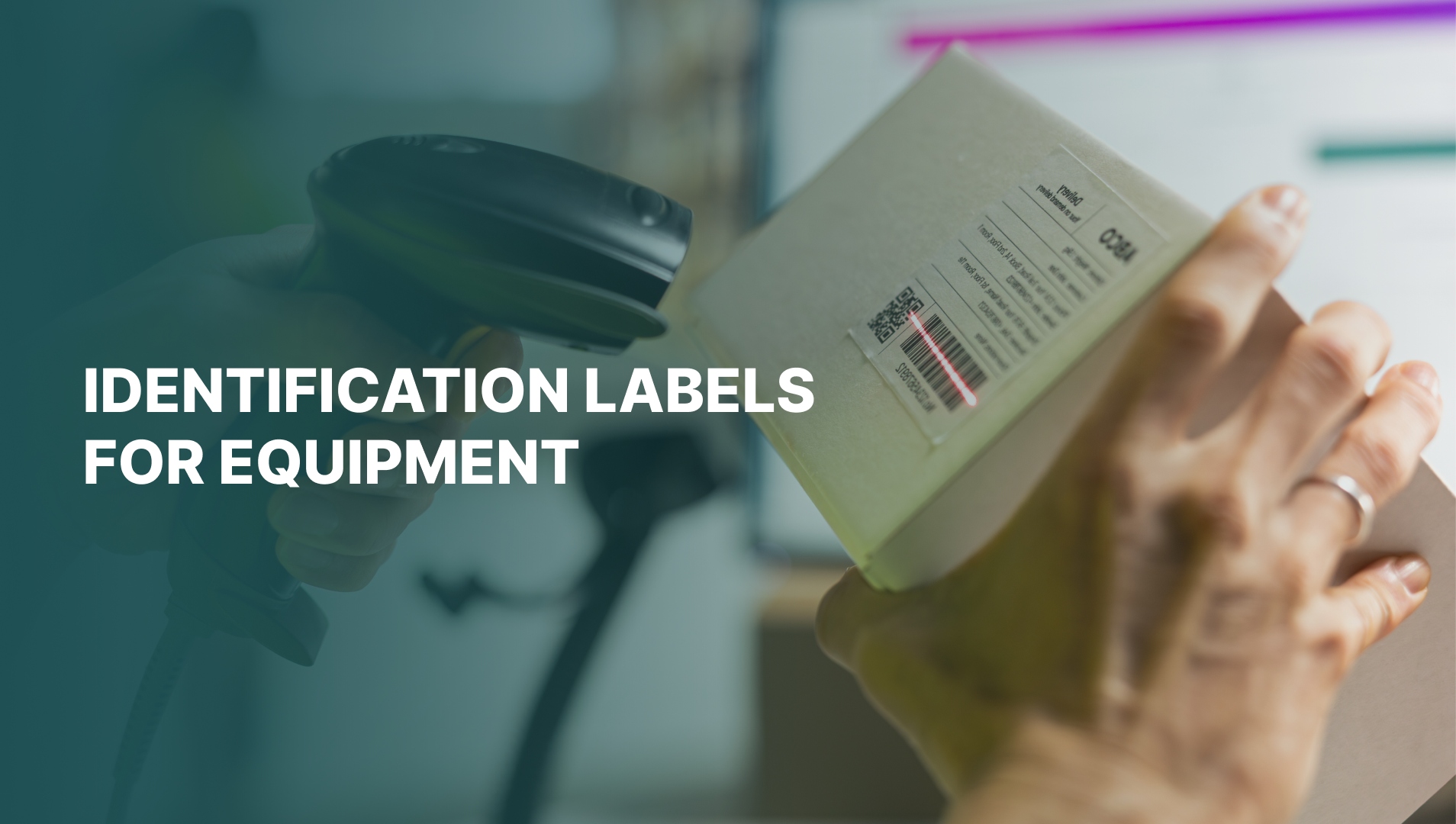
They are commonly integrated with barcodes or QR codes to support digital traceability systems. Typical information printed on these labels includes equipment ID numbers, serial and model details, manufacturer information, asset barcodes, safety warnings, and calibration or inspection data required for ongoing operational control.
uniform tamper indication, repeatable quality, and dependable bulk supply.
Common Label Materials Used for Equipment Identification
Selecting the right label material is critical for long-term equipment identification. Labels must remain legible despite exposure to heat, moisture, chemicals, abrasion, and UV light. The operating environment, surface type, and expected service life all influence which material performs best.
Below are the most commonly used label materials for industrial and commercial equipment identification:
Polyester (PET)
Polyester is one of the most widely used materials for equipment labels due to its durability and cost-effectiveness.
Excellent resistance to moisture, oils, and mild chemicals
Withstands moderate heat and UV exposure
Maintains print clarity over long periods
Suitable for indoor and light outdoor applications
Common uses include asset tags, control panel labels, electrical markings, and barcode labels.
Vinyl (PVC)
Vinyl labels offer flexibility and strong adhesion, especially on curved or irregular surfaces.
Flexible material adapts well to uneven equipment surfaces
Good resistance to water and abrasion
Performs well in outdoor environments
Available in conformable and high-tack adhesive options
Vinyl is frequently used for safety labels, warning decals, and equipment branding.
Polycarbonate (Lexan)
Polycarbonate is chosen when appearance and durability must be combined.
High impact and abrasion resistance
Excellent print clarity for overlays and nameplates
Handles repeated cleaning and operator contact
Performs well in moderate temperature ranges
It is commonly used for control panel overlays, membrane switches, and faceplates.
Aluminum
Aluminum labels are ideal for harsh industrial environments where plastic materials may degrade.
Withstands extreme temperatures
Highly resistant to chemicals, solvents, and UV exposure
Suitable for long-term outdoor use
Can be engraved or photo-anodized for permanent identification
Typical applications include equipment nameplates, serial number plates, and heavy-duty industrial assets.
Stainless Steel
Stainless steel is used where maximum durability and permanence are required.
Exceptional resistance to corrosion and chemicals
Performs in high-temperature environments
Ideal for washdown and marine conditions
Extremely long service life
These labels are common in food processing, pharmaceuticals, offshore installations, and heavy manufacturing.
Polypropylene (PP)
Polypropylene offers a lightweight and economical option for short- to medium-term labeling.
Good resistance to moisture and fatigue
Less expensive than polyester or vinyl
Suitable for clean, indoor environments
Limited heat and chemical resistance
Often used for temporary identification, inspection tags, and warehouse equipment labeling.
Selecting the right label material ensures equipment identification remains legible throughout its service life. Environmental conditions, surface type, and durability requirements should guide material choice to support safety, compliance, and long-term asset tracking.
Why Equipment Identification Labels Fail in Real-World Conditions

Equipment identification labels are often expected to remain readable for years, yet failures are common when operating conditions are not fully considered during label selection.
One of the primary causes is heat exposure, which softens adhesives and distorts printed information. In production environments, frequent contact with oil, grease, and lubricants can break down label materials and reduce adhesion over time.
Chemical cleaning agents used during routine maintenance may cause ink fading or material degradation. Outdoor or near-window installations expose labels to ultraviolet light, leading to discoloration and loss of contrast. Abrasion from regular handling, vibration, or contact with tools further accelerates wear.
Failures also occur when unsuitable adhesives are applied to textured or coated surfaces, or when incompatible thermal transfer ribbons result in smudging, fading, or poor print anchoring.
Environmental Challenges Affecting Equipment Labels
The operating environment plays a decisive role in how long equipment identification labels remain readable and securely bonded. Exposure conditions directly affect adhesive performance, print durability, and material lifespan, making environment-based selection essential rather than optional.
Common operating environments and their impact include:
High-temperature machinery: Continuous heat can soften adhesives, cause material shrinkage, and reduce ink anchoring. Labels used in these areas require heat-stable substrates and adhesives designed to maintain bond strength at elevated temperatures.
Outdoor-installed equipment: Prolonged exposure to sunlight, rain, and temperature fluctuations leads to ultraviolet degradation, fading, and adhesive breakdown if outdoor-rated materials are not used.
Cold storage environments: Low temperatures reduce adhesive tack, often resulting in edge lifting or label detachment. Materials and adhesives must be formulated to remain flexible under cold conditions.
Electrical panels and enclosures: Internal heat buildup and confined airflow can affect print stability and cause curling or distortion when incompatible materials are applied.
Washdown areas: Frequent contact with water, detergents, and sanitizing chemicals accelerates ink erosion and adhesive failure without chemical-resistant materials.
Industrial production floors: Constant abrasion, vibration, and manual handling gradually wear down label surfaces, reducing readability over time.
Understanding these environmental challenges helps ensure identification labels maintain adhesion, legibility, and reliability throughout the equipment lifecycle.
Adhesive Selection and Surface Compatibility
While label material determines durability, adhesive selection largely defines whether an equipment identification label remains securely bonded over time. Even high-performance materials can fail prematurely if the adhesive is not compatible with the surface or operating environment.
Adhesives respond differently to heat, texture, surface energy, and exposure conditions, making correct selection critical for long-term performance.
Common adhesive types used in equipment identification include:
1. Permanent acrylic adhesives: Widely used for general industrial applications, these adhesives provide strong long-term bonding and good resistance to moisture, oils, and aging on smooth metal and plastic surfaces.
2. High-temperature adhesives: Designed to maintain adhesion under sustained heat exposure, these adhesives are suitable for machinery, electrical enclosures, and equipment operating at elevated temperatures.
3. Aggressive industrial adhesives: Formulated for demanding environments, these adhesives offer high initial tack and strong bonding on rough or irregular surfaces where standard adhesives may fail.
4. Low-surface-energy adhesives: Used for plastics such as polypropylene and polyethylene, these adhesives enable proper bonding on surfaces that typically resist adhesion.
Surface compatibility also plays a major role in adhesive performance:
Painted metal surfaces require stable adhesives that can bond without lifting as paint ages or expands.
Powder-coated panels often have textured finishes that demand higher tack adhesives to ensure full contact.
Plastic housings vary in surface energy and may require specialized adhesive formulations.
Curved or textured surfaces reduce contact area, increasing the need for flexible adhesives that conform without edge lifting.
Matching adhesive type to surface condition and operating environment significantly reduces label failure, replacement frequency, and long-term identification risk.
Printing Method Considerations for Long-Term Legibility

The printing method used for equipment identification labels has a direct impact on how long critical information remains readable. In industrial environments, print quality must withstand heat, chemicals, abrasion, and frequent handling without fading or smudging. For this reason, durability should take priority over print speed or cost.
Thermal transfer printing is widely used for equipment labeling because it produces sharp, stable images by transferring ink from a ribbon onto the label surface. Unlike direct thermal printing, which relies on heat-sensitive coatings, thermal transfer prints are far more resistant to environmental stress.
The performance of the label is closely tied to the thermal transfer ribbon selected:
Wax ribbons are suitable only for low-exposure environments and are generally not recommended for equipment identification.
Wax–resin ribbons offer moderate durability and improved resistance to smudging.
Resin ribbons provide the highest level of durability and are preferred for equipment labels exposed to heat, chemicals, or abrasion.
Resin-based printing forms a strong bond between ink and label material, delivering superior smudge resistance, abrasion protection, and long-term readability.
When correctly matched with compatible label materials, thermal transfer printing ensures identification data remains legible throughout the equipment lifecycle.
Compliance and Audit Considerations
Equipment identification labels play an important role in meeting internal quality requirements and supporting audit readiness across manufacturing operations.
During inspections or compliance reviews, equipment must be clearly identifiable and consistently linked to maintenance and operational records. When labels are missing or unreadable, asset traceability gaps can occur, increasing the risk of audit observations or corrective actions.
From a quality and compliance perspective, effective equipment labeling supports:
Asset traceability expectations by ensuring each machine can be uniquely identified within internal systems.
Maintain record accuracy, allowing service histories, calibration data, and inspection logs to be reliably matched to the correct equipment.
Equipment identification during audits, where clear labeling simplifies verification and reduces documentation discrepancies.
Export documentation support, particularly where equipment traceability is required for regulated or customer-audited facilities.
Safety labeling consistency, helping maintain visibility of warnings, operating limits, and inspection markings.
In many facilities, identification labels are also integrated with digital asset management systems, which influences whether barcode technology is required.
Barcode vs Non-Barcode Identification Labels

Non-barcode labels may be sufficient where equipment identification is managed manually. However, barcodes are typically required when assets are tracked digitally or when maintenance processes rely on scanning for verification.
Key considerations include:
When barcodes are required: Barcode labels are commonly used in facilities implementing computerized maintenance management systems or centralized asset tracking platforms.
Asset tracking software integration: Barcoded equipment labels allow seamless linkage between physical assets and digital records.
Maintenance scanning: Technicians can quickly retrieve service history or log maintenance actions through barcode scans.
Importance of scan accuracy: Poor print quality or incorrect material selection can result in unreadable codes, disrupting traceability workflows.
Consequences of barcode degradation: Fading, smudging, or abrasion can lead to repeated relabeling, data mismatches, and audit inefficiencies.
For long-term performance, barcode labels are typically produced using thermal transfer printing, which offers superior durability compared to heat-sensitive print methods.
When combined with suitable materials and ribbons, thermal transfer–printed barcodes maintain legibility and reliability throughout the equipment lifecycle.
Industry-Specific Applications of Equipment Identification Labels
Equipment identification requirements vary significantly by industry, depending on operating conditions, regulatory expectations, and asset management practices.
Selecting suitable label materials and printing methods based on industry use helps ensure long-term reliability and traceability.
Manufacturing plants: Labels are used for asset identification, preventive maintenance tracking, and machine documentation. Materials must withstand heat, vibration, oil exposure, and regular handling on production floors.
Pharmaceutical equipment: Identification labels support traceability, calibration tracking, and audit documentation. Labels must remain legible despite frequent cleaning, chemical exposure, and strict maintenance controls.
Electrical panels and switchgear: Labels are applied to enclosures, breakers, and control panels where heat buildup and electrical safety requirements demand stable materials and permanent adhesion.
Warehousing and material handling: Equipment such as forklifts, conveyors, and storage systems relies on durable barcode labels to support scanning, inspection routines, and asset tracking systems.
Solar installations: Outdoor exposure to ultraviolet radiation, moisture, and temperature variation requires weather-resistant materials capable of maintaining print contrast over extended periods.
Laboratory equipment: Labels must support precise identification and calibration records while resisting chemical spills, cleaning agents, and frequent handling.
Understanding these application-specific requirements helps ensure equipment identification labels perform reliably within each operating environment.
How to Choose the Right Identification Label for Equipment
Selecting equipment identification labels is not only a material decision but an operational one. The correct choice reduces relabeling frequency, supports traceability, and lowers long-term maintenance risk.
A structured evaluation process helps ensure labels remain readable and securely bonded throughout the equipment lifecycle.
Key factors to assess when selecting identification labels include:
Operating temperature: Determine both normal and peak temperature exposure to ensure materials and adhesives remain stable.
Chemical exposure: Consider contact with oils, lubricants, cleaning agents, or solvents that may degrade print or adhesion.
Indoor or outdoor use: Outdoor installations require resistance to ultraviolet radiation, moisture, and temperature variation.
Expected service life: Labels intended to last for the full equipment lifespan require higher-grade materials and printing methods.
Surface material: Painted metal, powder-coated panels, plastics, and textured surfaces all influence adhesive selection.
Barcode requirement: Barcodes demand stable print quality to maintain scan accuracy over time.
Print volume: High-volume labeling programs benefit from consistent material specifications and repeatable print performance.
Replacement frequency: Frequent label replacement often indicates incorrect material, adhesive, or ribbon selection.
While these factors guide selection, effective equipment labeling typically requires more than purchasing labels alone. Reliable performance depends on proper material guidance, adhesive testing against real surfaces, and ribbon compatibility with the selected printing method.
Consistent quality across production batches and dependable bulk supply are equally important for maintaining uniform identification standards.
Manufacturers often work with integrated suppliers such as Gannayak Packaging, capable of providing durable barcode labels, compatible thermal transfer ribbons, and application-based material recommendations under a single supply framework.
Gannayak Packaging’s Services for Equipment Identification

Gannayak Packaging offers a comprehensive suite of labeling and material solutions that directly address the selection challenges discussed in this blog and support reliable equipment identification in industrial environments.
Labeling and print consumables:
Barcode labels made from high-performance materials such as polyester, polypropylene, polyimide, and paper meet the durability requirements for equipment identification across varied environments. These labels can be matched to specific surface and environmental needs, helping prevent common failures such as fading or adhesive loss.
Printed labels tailored to customer specifications ensure that details such as equipment IDs, serial numbers, and manufacturer information remain clear under operational stress.
Thermal transfer ribbons in wax, wax-resin, and resin grades support long-term legibility. Resin ribbons in particular are engineered for environments with chemical exposure, heat, or abrasion, enhancing print durability and scan reliability.
Security and traceability:
High security labels including tamper-evident and holographic options help equipment owners safeguard against unauthorized access or tampering, which is critical for regulated industries such as pharmaceuticals and electronics.
Material and production capabilities:
Gannayak’s broad product range is supported by in-house manufacturing and R&D collaborations, enabling technical guidance on material selection and adhesive compatibility for specific applications.
By offering both technical material options and configurable label solutions, Gannayak Packaging supports manufacturers in overcoming the durability, environmental, and traceability challenges associated with equipment identification — streamlining supplier selection and reducing lifecycle risk.
Conclusion: Reducing Long-Term Operational Risk
Equipment identification labeling should be treated as long-term operational infrastructure rather than a one-time procurement item. When incorrect materials, adhesives, or printing methods are selected, labels deteriorate prematurely, leading to repeated replacement, asset misidentification, and unplanned downtime. Over time, these issues increase maintenance costs and weaken traceability systems.
Selecting appropriate materials and printing technologies based on operating conditions significantly extends label life and reduces replacement frequency. Equally important is working with suppliers who understand environmental exposure, surface compatibility, and durability requirements across industrial applications.
Partnering with a packaging and labeling manufacturer experienced in industrial environments helps ensure identification labels remain readable, compliant, and reliable throughout the equipment lifecycle. Take the first step today!
Frequently Asked Questions (FAQs)
1. How long do equipment identification labels last?
The lifespan depends on the operating environment and material selection. Labels used indoors may last several years, while harsh or outdoor conditions require high-durability materials designed to remain readable throughout the equipment lifecycle.
2. Can equipment identification labels be customized?
Yes. Labels can include variable data such as asset numbers, serial codes, barcodes, QR codes, and department identifiers. Customization helps align equipment labeling with internal asset tracking and maintenance systems.
3. Which labels work best for frequent cleaning?
Equipment that is regularly cleaned or sanitized requires chemical-resistant materials and durable printing methods. Using suitable substrates with resin-based thermal transfer printing helps maintain legibility despite repeated washdowns.
4. Why source labels and ribbons from one supplier?
Label performance depends heavily on ribbon compatibility. Sourcing both from an integrated supplier such as Gannayak Packaging helps ensure consistent print quality, improved durability, and reduced barcode scan failures.
5. How can manufacturers reduce repeated relabeling?
Repeated relabeling is usually caused by incorrect material or adhesive selection. Working with suppliers that provide application-based guidance and consistent bulk supply helps reduce early failures and long-term maintenance costs.